
Panamanian Banking Outlook Towards 2027: Solvency, Liquidity, and Wealth Custody According to Moody’s

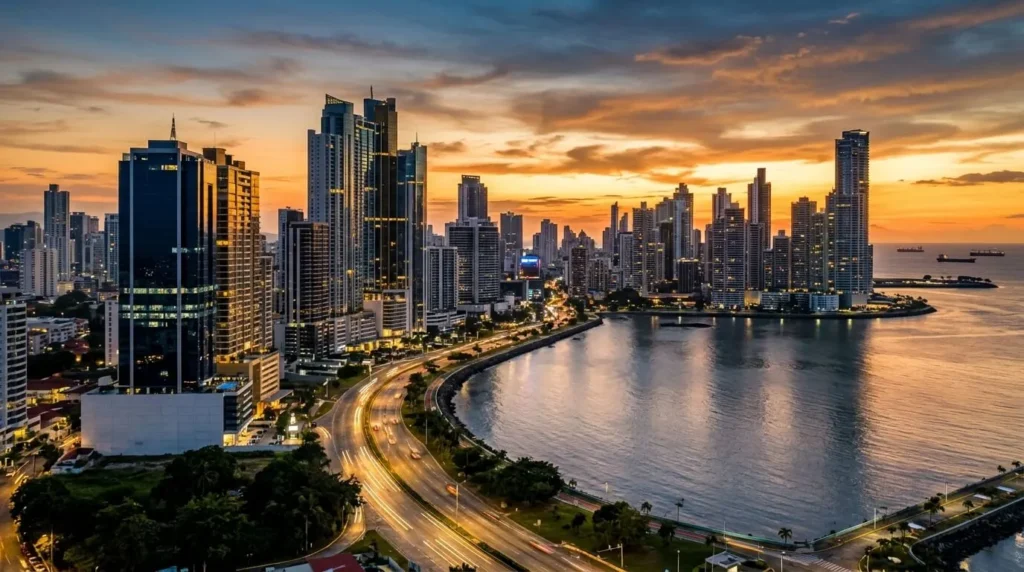
The Panamanian financial system is heading towards the end of 2026 with solvency metrics that confirm its role as a regional capital safe haven. The Moody’s Local report, presented by analysts Amada Rubio and Rolando Martínez, ratifies that Panama’s banking sector maintains a trajectory of moderate growth and structural stability with an eye on 2027, founded on rigorous risk management and deposit expansion that outpaces credit placement. The report highlights Panama’s strong position in attracting and safeguarding international capital.
Quick Answer: Moody’s projects for 2027 a Panamanian banking system characterized by high liquidity, credit moderation, and controlled delinquency. The accumulation of deposits at a pace exceeding placements reinforces the financial center’s solvency, positioning Panama as a dollar wealth custody hub protected from external volatilities and regional monetary pressures.
In this article
- Executive Summary: Moody’s Radiography Towards 2027
- Fundamental Indicators of Panamanian Banking for 2026 and 2027
- Deposit Security and Regulation by the Superintendency of Banks of Panama
- Operational Comparison: Banking System Metrics 2026 vs. 2027
- Panamaway Expert Analysis: Capital Custody and International Treasury
- Frequently Asked Questions About Panamanian Banking Solvency
- Final Outlook on Financial Stability in Panama
Executive Summary: Moody’s Radiography Towards 2027
- Sustained Credit Growth: During 2026, the historical gap between local and external credit narrowed, consolidating balanced expansion in trade, consumption, and public financing.
- Structural Liquidity Surplus: Deposit collection is growing faster than credit demand, providing entities with absorption buffers against external interest rate fluctuations.
- Portfolio Quality Under Control: Delinquent loan levels show gradual declines, supported by reserve coverage that comfortably meets prudential standards.
- Resilient Profitability: Return on assets (ROA) and financial margins remain stable compared to 2025, despite the monetary pressures from the U.S. Federal Reserve.
- Dollar Corporate Hub: The absence of a central issuing bank forces banks to operate under strict market discipline, a factor that enhances security for opening corporate and individual accounts.
Fundamental Indicators of Panamanian Banking for 2026 and 2027
The assessment issued by Moody’s Local aligns with the analyses we have been conducting on the country’s financial ecosystem. As we analyzed in our report on the shift in Panamanian banking according to Moody’s in 2026, local entities have prioritized balance sheet quality over unbridled volume growth, a strategy that yields dividends in stability.
Credit Dynamism and Portfolio Convergence
One of the most significant findings of 2026 is the closing of the gap between domestic and international credit portfolios. Historically, both segments showed marked asymmetries depending on the regional cycle. Currently, the synchronization between local credit (driven by trade, consumption, and infrastructure) and cross-border lines reflects a mature market that equally serves domestic demand and the activity of multinational corporations choosing to set up a company in Panama for their hemispheric operations.
Deposit Growth vs. Placements
For depositors and wealth investors, the crucial data lies in the relationship between collections and loans. The fact that deposit growth continues to outpace credit placements means banks operate with minimal mismatch. In a non-issuing banking system, liquidity depends exclusively on real funding (customer deposits and interbank lines), eliminating the risk of inflationary bailouts or uncontrolled issuance.
Deposit Security and Regulation by the Superintendency of Banks of Panama
The projected stability for 2027 is not accidental; it responds to the regulatory framework imposed by the Superintendency of Banks of Panama (SBP) through Executive Decree 52 of 2008 (Banking Law) and its complementary agreements. Unlike other jurisdictions where banks maintain minimum legal liquidity ratios close to 10%, Panamanian regulations require a legal liquidity index of no less than 30% on demand and term deposits up to 186 days, although in practice the International Banking Center usually operates above 55%.
Likewise, capital adequacy requirements comfortably exceed the regulatory minimum of 8% on risk-weighted assets, averaging above 15%. This safeguard mitigates the potential impact of the debate surrounding the sovereign debt investment grade in Panama, clearly separating the soundness of the private banking system from the fiscal needs of the public sector.
Operational Comparison: Banking System Metrics 2026 vs. 2027
The following table summarizes the operational parameters observed at the close of 2026 and Moody’s technical projections for the 2027 fiscal year:
| System Metric | Performance in 2026 | Technical Projection 2027 | Implication for Investor |
|---|---|---|---|
| Credit Growth | Gradual recovery; convergence between local and external portfolios | Moderate growth with placement discipline | Predictable access to corporate and mortgage financing |
| Collection Rate | Deposits growing above credit placement | Continuity in global positive liquidity excess | Deposit custody backed by effective reserves |
| Delinquency Rate | Progressive reduction of past-due loans | Stability at controlled levels with high provisions | Substantially low systemic insolvency risk |
| Return on Assets (ROA) | Stable financial margin with slight year-on-year improvement | Sustainability of operating margins | Entities with strength to invest in cybersecurity and technology |
| Operational Digitization | Record investments in core platforms and security | Consolidation of remote transactional banking | Agile international treasury management without constant physical presence |
Panamaway Expert Analysis: Capital Custody and International Treasury
From a wealth structuring perspective, Moody’s diagnosis provides operational certainty for investors seeking to diversify risks outside of Europe or North America. Panama not only offers a fully dollarized system but also strict fiscal separation based on the principle of territoriality.
Scenario 1: Corporate Treasury for International Trade or Services
A business owner managing a Panamanian company to bill for consulting services or digital trade to clients in Europe or South America requires stability in their banking settlement channels. With the technological consolidation highlighted by Moody’s, Panamanian banks allow for immediate traceability of SWIFT and ACH transfers. Under Article 694 of the Panamanian Tax Code, income generated outside national territory remains 100% exempt from income tax (ISR), and yields from term deposits or savings accounts in local banks are also not taxed in Panama.
Scenario 2: Family Liquid Wealth in Multijurisdictional Diversification
For high-net-worth families transferring their legal residency through programs like the Qualified Investor Visa, banking soundness is the pillar of their wealth preservation. Panamanian private banking does not compete on speculative rates but on balance sheet strength. The fact that deposits exceed placements ensures that, in the face of potential global geopolitical turbulence, entities have the necessary liquidity to meet withdrawals or portfolio rebalancing without compromising their operations.
Frequently Asked Questions About Panamanian Banking Solvency
Is there a risk of internal bailout or bank run in Panamanian banks?
No. The banking system operates without a central bank financing the government through issuance, and the SBP’s strict regulation requires real liquidity buffers exceeding 50%. Banks cannot be forced to purchase government debt with their depositors’ savings.
Are banking interests generated by foreigners in Panama taxed?
No. According to Panamanian tax legislation, interest generated by savings accounts and term deposits in authorized banking institutions in Panama are formally exempt from local income tax, regardless of the holder’s residency status.
How does the Federal Reserve’s interest rate policy influence local banks?
As a dollarized economy, interest rates in Panama follow the trends of the U.S. interbank market. However, the current domestic liquidity surplus cushions abrupt variations, allowing banks to maintain stable margins without disproportionately increasing the cost of credit.
Final Outlook on Financial Stability in Panama
The Moody’s Local report dispels uncertainties about the Panamanian International Banking Center’s ability to navigate complex economic cycles. The combination of surplus liquidity, prudential supervision, and technological modernization places the hub in a competitive advantage position for 2027, providing the framework of legal and patrimonial security demanded by international asset protection structures.
🏛️ Editorial standards & verified official sources
This technical analysis has been prepared and reviewed under international tax compliance standards (OECD/CRS) cross-referencing official regulations in the Republic of Panama: