
Panama’s Banking Shift by 2026 According to Moody’s: Implications for Investors and Foreign Assets

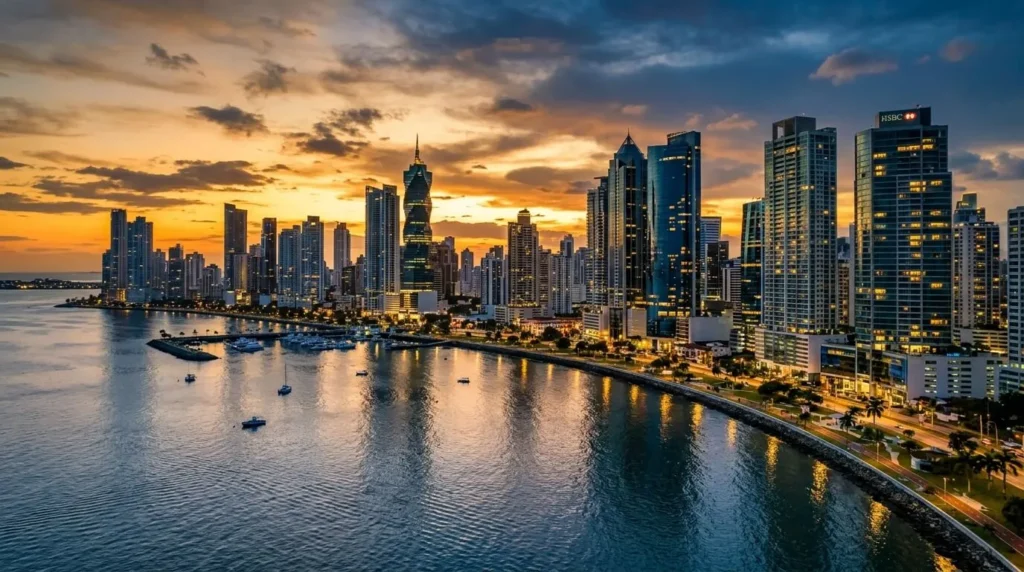
Panama’s International Banking Center is reshaping its operational model towards a more selective and cross-border approach. According to the sector report published by Moody’s Ratings in 2026, financial institutions based in the country have chosen to decouple their business pace from domestic credit demand, prioritizing regional diversification, risk containment in construction and mortgages, and strengthening capital in anticipation of progressively effective capital requirements by 2027.
Quick Answer: Moody’s 2026 report confirms that Panamanian banking prioritizes solvency over domestic volume. With non-performing loans reduced to 2.2% and loans to non-residents at 30% of the system, institutions offer maximum soundness for deposits and wealth management treasury, although they restrict financing for local real estate developers.
Key Points from the Moody’s Ratings Report
- Real Contraction in Domestic Credit: In the first half of 2026, nominal local credit grew by 1.3% year-on-year, representing a 1% contraction after accounting for inflation.
- Growth in Cross-Border Credit: Loans to non-residents increased by 6.6% year-on-year as of September 2026, reaching 30% of the total portfolio compared to 21% in 2019.
- Reduced Real Estate Exposure: The construction portfolio decreased by 4% year-on-year due to excess inventory and revisions in the preferential interest rate regime.
- Improved Credit Quality: Non-performing loans over 90 days fell to 2.2% of the gross portfolio, down from 2.9% recorded in 2023.
In this article
- Key Points from the Moody’s Ratings Report
- Disconnection Between Panamanian GDP and Local Credit
- Leap to Regional Banking: Non-Resident Loans at 30%
- Evolution of Key Banking Indicators in Panama (2019-2026)
- Expert Analysis by Panamaway: Practical Consequences for Investors
- 1. Depositors and International Corporate Treasuries
- 2. Real Estate Investors vs. Developers
- 3. Concentration and Strength in General License Banking
- Frequently Asked Questions about Panamanian Banking
- Financial System Outlook for 2026
Disconnection Between Panamanian GDP and Local Credit
Panama maintains one of the strongest macroeconomic expansion rates on the continent, with Gross Domestic Product (GDP) growth projected around 4% for 2026. However, this dynamism is not translating into increased borrowing for local households or small and medium-sized enterprises. The technical explanation lies in the growth drivers: capital-intensive sectors and international logistics—such as port terminals, multimodal transport, and export corporate services—which depend on cross-border capital flows and generate lower demand for retail commercial credit.
This scenario is related to analyses of the country’s fiscal discipline, a factor we examine when addressing the debate on Panama’s investment grade in 2026. Concurrently, the Superintendency of Banks of Panama (SBP) continues to align liquidity and capital metrics with Basel III standards, leading banking risk departments to reject projects that could compromise their solvency ratios.
Leap to Regional Banking: Non-Resident Loans at 30%
The response from Panamanian financial institutions to the sluggishness of domestic credit has been to expand their cross-border presence. The share of loans granted to non-resident borrowers has climbed nine percentage points since 2019, standing at 30% of balances by the end of 2026.
This strategy allows banks to sustain attractive intermediation margins by placing liquidity in consolidated corporations in Central America, the Andean region, and the Caribbean. Banks thus compensate for the slower domestic mortgage pace through structured foreign trade operations and syndicated corporate financing, which directly impacts the soundness of their balance sheets.
For foreign entrepreneurs operating through a local corporate structure, this context is decisive. When it comes to setting up a company in Panama, the robustness of the banking system and its regional orientation facilitate the reception of international payments and multi-currency treasury management, provided there is adequate economic substance and regulatory compliance.
Evolution of Key Banking Indicators in Panama (2019-2026)
The transformation of the Panamanian banking system over the past seven years reflects a structural shift towards capital preservation and credit selectivity:
| Banking Indicator (General System) | Year 2019 | Year 2023 | Year 2026 (Moody’s) | Strategic Trend |
|---|---|---|---|---|
| Loans to Non-Residents (% of Total Portfolio) | 21.0% | 26.4% | 30.0% | Increased Geographic Diversification |
| Non-Performing Loans > 90 Days (% Gross Portfolio) | 1.8% | 2.9% | 2.2% | Asset Quality Improvement and Clean-up |
| Real Growth of Local Credit | +3.2% | +1.1% | -1.0% | Contraction due to Domestic Caution |
| Exposure to Residential Construction | High | Moderate | Reduced (-4% Year-on-Year) | Restriction in Financing Developers |
| Regulatory Capital Requirements (SBP) | Transition | Basel Standard | Final Phase Towards 2027 | Larger Loss Absorption Buffer |
Expert Analysis by Panamaway: Practical Consequences for Investors
Moody’s conclusions should not be interpreted as a sign of financial vulnerability, but rather as the consolidation of a conservative and highly capitalized credit environment. This scenario has specific repercussions depending on the asset profile:
1. Depositors and International Corporate Treasuries
The contraction in domestic credit and the reduction in non-performing loans to 2.2% benefit international depositors. Institutions are not forced to take on local risks to generate returns on their liabilities. Additionally, the Panamanian legal framework—supported by the principle of territoriality in Article 694 of the Tax Code—establishes that interest generated from bank accounts and fixed-term deposits in Panama is exempt from Income Tax (ISR), making the country an ideal custodian for liquidity reserves.
2. Real Estate Investors vs. Developers
The 4% drop in construction financing reflects that banks have tightened lending to speculative projects. For investors acquiring residential or commercial assets with their own capital (equity or external leverage), this represents an advantage: the credit slowdown prevents supply bubbles and stabilizes market prices in established areas like Costa del Este or Punta Pacífica. However, those requiring a local mortgage should anticipate more extensive due diligence processes by credit committees.
3. Concentration and Strength in General License Banking
The market continues to consolidate among large groups capable of absorbing the capital requirements set by the SBP for 2027. This movement follows large-scale corporate operations in the market, a phenomenon we analyzed when reviewing how the merger of BAC and Multibank impacts investors.
Frequently Asked Questions about Panamanian Banking
Does this credit slowdown pose a risk to non-resident deposits?
No. The credit deceleration is a response to a prudent policy by the institutions and to increased capital requirements imposed by the Superintendency of Banks of Panama. Far from increasing risk, the reduction in non-performing loans to 2.2% and the moderation of local leverage consolidate depositor protection.
Does this Moody’s report make opening corporate accounts more difficult?
Compliance and due diligence (KYC) criteria have not been tightened by the report, but by global anti-money laundering regulations. Panamanian banks continue to open accounts regularly for companies that demonstrate real economic activity, lawful origin of funds, and fiscal traceability.
How does the credit contraction affect real estate purchases?
Developers with unfinished projects face greater financial restrictions, which purges the market and rewards developments backed by their own capital. For international buyers with available funds, the context opens opportunities for direct negotiation without the inflationary pressure of retail bank credit.
Financial System Outlook for 2026
The Moody’s Ratings report confirms the transition of banking in Panama towards a more sophisticated and regionalized ecosystem. For international assets, credit selectivity and the strong capitalization of banks represent an environment of institutional stability and legal security, crucial factors for structuring business operations and preserving liquid assets in Panama.
🏛️ Editorial standards & verified official sources
This technical analysis has been prepared and reviewed under international tax compliance standards (OECD/CRS) cross-referencing official regulations in the Republic of Panama: