
European Investment Bank headquarters in Panama: what it means for private capital and legal certainty in 2026

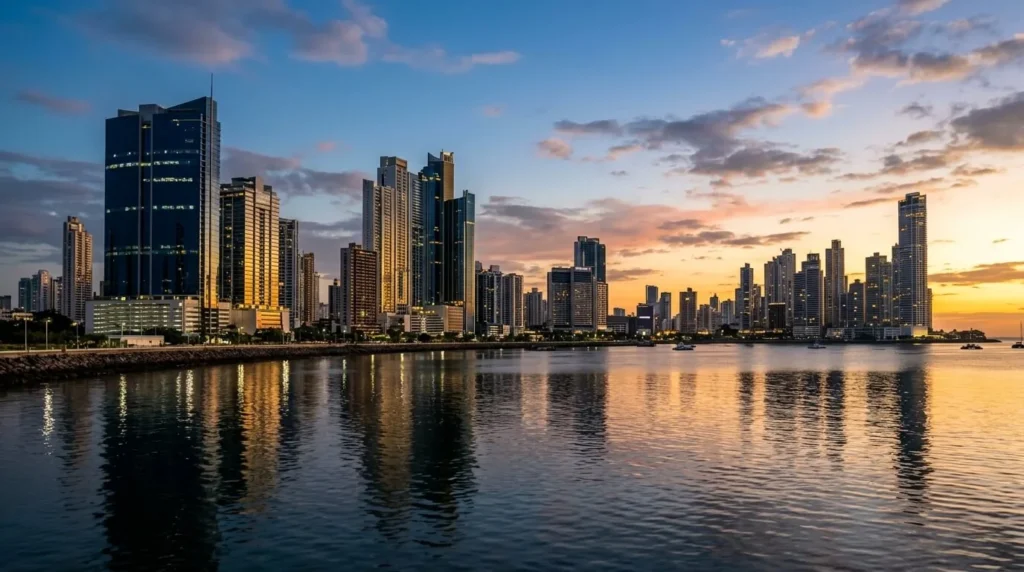
The formalization of the headquarters agreement between the Government of Panama and the European Investment Bank (EIB) ratifies the positioning of Panama City as the nerve center for corporate and multilateral finance in the isthmus. The European Union’s financial arm centralizes the supervision and execution of its credit portfolio in Central America and Mexico from here through its EIB Global division.
Quick answer: The opening of the European Investment Bank (EIB) regional headquarters in Panama consolidates the country as the financial hub for Central America and Mexico. With over $1.1 billion channeled historically and the management of the €1 billion Global Gateway fund, this designation strengthens legal certainty, bank credit, and institutional co-investment in 2026.
For wealth managers, private funds, and entrepreneurs structuring assets in the financial center, this institutional move represents a first-class endorsement. Below, we break down the determining factors of this decision:
- Multilateral validation: The physical presence of the European Union’s bank strengthens technical dialogue and debunks reputational risk narratives about the jurisdiction.
- Liquidity deployment: Direct management of an initial portfolio exceeding €1 billion destined for energy transition, mobility, and sanitation under the Global Gateway plan.
- Synergy with the banking center: Coordination of syndications and structured financing with banks supervised by the Superintendency of Banks of Panama (SBP).
- Attraction of private capital: Catalytic effect for private debt funds, concessionaires, and engineering companies operating under local corporate regimes.
In this article
- Why the European Union chooses Panama as its regional operations center
- Direct impact on Panamanian banking, liquidity, and regulatory framework
- Panamaway Analysis: implications for wealth and private investment
- 1. Reduction of risk premium and institutional certainty
- 2. Dynamization of the corporate and high-end residential real estate market
- 3. Co-investment scenarios for family offices
- Frequently asked questions about the EIB headquarters in Panama
Why the European Union chooses Panama as its regional operations center
The choice of Panama over other Central American capitals is based on tangible operational fundamentals: global air connectivity, use of the US dollar as legal tender, solvency of the international banking center, and an extensive track record of credit execution. The EIB has channeled over $1.1 billion in Panamanian territory, highlighting key contributions such as the $500 million co-financing for the expansion of the Panama Canal.
Through its technical division EIB Global, the entity seeks to expedite disbursements on strategic projects in Costa Rica, El Salvador, Guatemala, Honduras, Mexico, and the local market. As we analyzed in our evaluation of Panama as a regional financial hub, Panamanian banking infrastructure offers a clearing and custody platform unmatched in the rest of the Central American region.
| Operational parameter | EIB deployment in Panama | Impact on the local market |
|---|---|---|
| Cumulative financing history | More than $1.1 billion | Financing of critical infrastructure (Panama Canal, potable water, sanitation) |
| Active regional fund (Global Gateway) | €1 billion | Integration of electricity grids and sustainable mobility in 6 countries |
| Territorial scope of the technical office | Central America and Mexico | Attraction of executives, international technical staff, and specialized consultants |
| Banking liaison | Superintendency of Banks of Panama (SBP) | Increased credit syndication with local entities and development banking |
Direct impact on Panamanian banking, liquidity, and regulatory framework
The physical anchoring of a multilateral development bank with the highest credit rating (AAA) generates positive externalities for the Panamanian financial system. In a context where the banking center is reinforcing its solvency and capital adequacy ratios—an aspect thoroughly examined in our report on the Panamanian financial system in 2026—the EIB’s presence offers a direct channel for long-term liquidity.
From a regulatory standpoint, joint operations with the private sector are often structured through corporate vehicles established under Law 32 of 1927 on Corporations or trust agreements supervised by the SBP. Investors participating as contractors, consultants, or partners in international consortia benefit from the principle of territoriality stipulated in Article 694 of the Fiscal Code of Panama, which states that only taxable income generated within Panamanian territory is subject to Income Tax (ISR).
For business groups establishing technical support centers or headquarters to bid on these regional tenders, tools such as the SEM Law (Headquarters of Multinational Enterprises) or the incorporation of operating subsidiaries to create a company in Panama provide a transparent and fully audited platform in compliance with OECD standards.
Panamaway Analysis: implications for wealth and private investment
The definitive arrival of the EIB should not be interpreted as a mere diplomatic act; it has direct operational implications for family offices, institutional investors, and financial directors analyzing the Panamanian jurisdiction:
1. Reduction of risk premium and institutional certainty
The formal establishment of a European Union headquarters on national territory effectively weakens the arguments of those who question Panama’s legal certainty. A community entity would not establish its regional headquarters in a country whose legal or institutional framework presents critical custody or regulatory compliance vulnerabilities.
2. Dynamization of the corporate and high-end residential real estate market
The arrival of the EIB Global technical and managerial team, along with the network of engineering, auditing, and consulting firms that orbit around it, generates constant demand for prime residential and office rentals in areas such as Costa del Este, Santa María, and the banking district. Simultaneously, foreign executives gain fluid access to legal residency through specific migratory permits regulated by the National Migration Service (SNM).
3. Co-investment scenarios for family offices
An increasingly common scenario in 2026 involves private wealth co-financing debt or subordinated capital tranches in concession projects where the EIB assumes the main risk portion. The structure of bank guarantees and the supervision of the General Directorate of Revenue (DGI) under the e-Tax 2.0 platform allow these vehicles to be instrumented with full international tax traceability.
Frequently asked questions about the EIB headquarters in Panama
Which countries are coordinated operationally from the EIB headquarters in Panama City?
The regional technical office of EIB Global oversees all credit operations, infrastructure projects, and technical assistance programs for Costa Rica, El Salvador, Guatemala, Honduras, Mexico, and the Republic of Panama.
Which sectors receive the largest share of EIB funding in the region?
The bank’s sectoral priorities focus on renewable energy and regional electrical interconnection, water and sanitation infrastructure, sustainable transport and mobility, as well as intermediated credit lines aimed at fostering small and medium-sized enterprises.
Does this opening affect the taxation of foreign investors in Panama?
The tax framework remains governed by the principle of territoriality in Article 694 of the Fiscal Code. Foreign-sourced operations and income continue to be exempt from taxation in Panama, although companies participating in local projects will be taxed exclusively on taxable income earned in Panamanian territory.
The confirmation of Panama City as the headquarters for the European financial arm for Central America ratifies the maturity of the financial center. For economic agents seeking banking stability, regulatory solvency, and the capacity for dollar-denominated wealth deployment, the isthmus confirms its status as a benchmark continental financial enclave.
🏛️ Editorial standards & verified official sources
This technical analysis has been prepared and reviewed under international tax compliance standards (OECD/CRS) cross-referencing official regulations in the Republic of Panama: